


Keeping Kids Safe Resources
Home »Keeping Kids Safe Resources
The Daniel Morcombe Foundation Keeping Kids Safe Resources have been created in memory of Daniel Morcombe to help keep other children and young people safe. Every year new resources will be developed and released.
The resources are written for a diverse range of students from prep to senior years and the suite contains over 20 videos and activities. They are best used as part of a comprehensive whole school approach to personal safety education and are aligned with the following:
- Australian Curriculum, Assessment and Reporting Authority (ACARA)
- Daniel Morcombe Child Safety Curriculum
- Health Promoting Schools Framework
Teachers have access to teacher guides to support classroom delivery and parent/carer resources are available to encourage discussions about personal safety at home.
Access ALL Resources here
Interactive Resource / Resources for teachers / School & ELC Resources
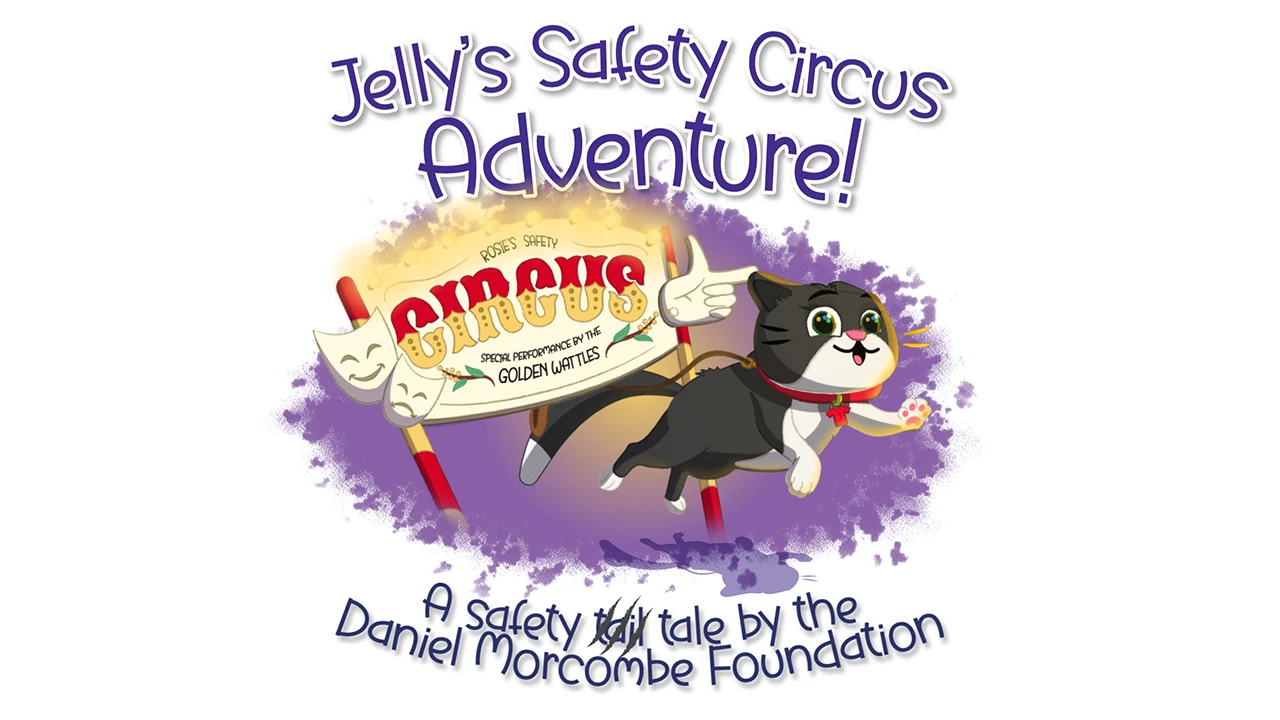
Jelly's Safety Circus Adventure
Jelly’s Safety Circus Adventure
Jelly's latest adventure takes him to Rosie’s Safety Circus, a place full of sparkling lights and magical sounds. Ringmaster Rosie helps the children understand:
- Everyone is the boss of their own body
- It's always okay to say "No"
- To tell a safe adult when something feels uncomfortable.
ABCSL / Personal Safety / Group Activity / Online Safety / Resources for Parents and Carers / Resources for teachers / School & ELC Resources
2026 - The 'F' Word...Fake
For young people aged 13 – 15, this educational video explores AI-facilitated image-based abuse, or ‘deepfakes’. It follows the journey of three teenagers as they recognise the harm caused by these fake images, react and report, to take back control.
This film aims to encourage young people to reach out for help if they experience harm related to deepfakes online. Created in consultation Young Advisors, Educator Advisors and subject matter experts, each character’s story is grounded in research and lived experience script consultation.
Use the guides below to facilitate educational experiences, conversations in your family or community and your own learning.
ABCSL / Personal Safety / Group Activity / Online Safety / Resources for Parents and Carers / Resources for teachers / Recognise, React, Report / School & ELC Resources
2026 - Sextortion Break the Silence
For young people aged 13 – 15, this educational video explores sextortion, a form of image-based abuse where someone threatens to use your images against you if you don’t give in to their demands. Through the stories of three teenagers, we recognise how easily sextortion unfolds, how difficult it is to know how to react, and how reporting can help a victim regain control.
This film aims to encourage young people to reach out for help if they experience sextortion. Created in consultation Young Advisors, Educator Advisors and subject matter experts, each character’s story is grounded in research and lived experience script consultation.
Use the guides below to facilitate educational experiences, conversations in your family or community and your own learning.
Resources for Parents and Carers / Resources for teachers / Factsheet / Workplace Resources
Trauma Informed Approach
Personal Safety / Resources for Parents and Carers / Resources for teachers / Factsheet / Workplace Resources
Responding to a Disclosure of Abuse
Interactive Resource / Resources for teachers / School & ELC Resources

Jelly Surprise
Jelly Surprise
For children aged 0 to 6, Jelly Surprise is our second FREE digital animated children’s book that helps children understand how their body clues and feelings help them recognise when they are in a safe or unsafe place.
- Supported by a Companion Guide with Early Years Learning Framework for Australia V2.0 links.
- Conversation starters linking the content to Recognise, React, Report.
ABCSL / Interactive Resource / School & ELC Resources
2025 - ABCSL Lower Primary
For children aged 7 to 9, the theme explores safely navigating online spaces and identifying what is real versus what is fake.
ABCSL Lower Primary is an animated digital resource that resource equips children with the knowledge to question what they experience and seek help if they feel unsafe.
- Real-life scenarios.
- Supported by an Educator Toolkit with Australian Curriculum V9 links.
- Practical activities to help kids Recognise, React to and Report unsafe situations.
ABCSL / Interactive Resource / School & ELC Resources
2025 - ABCSL Upper Primary
For children aged 10 to 12, the theme explores how easily chat-bots and AI companions can invade children’s lives and the spaces where they hang out.
ABCSL Upper Primary is an animated video resource to help equip children with the knowledge to question what they experience and seek help if they feel unsafe.
- Real-life scenarios.
- Supported by an Educator Toolkit with Australian Curriculum V9 links.
- Practical activities to help kids Recognise, React to and Report unsafe situations.
Resources for Parents and Carers / Resources for teachers / Workplace Resources
Don't Waste It
Designed as both a tribute and an educational resource, Don’t Waste It! speaks directly to teens aged 13 to 15, helping them understand personal safety in real-world situations.
Interactive Resource / Resources for teachers / School & ELC Resources
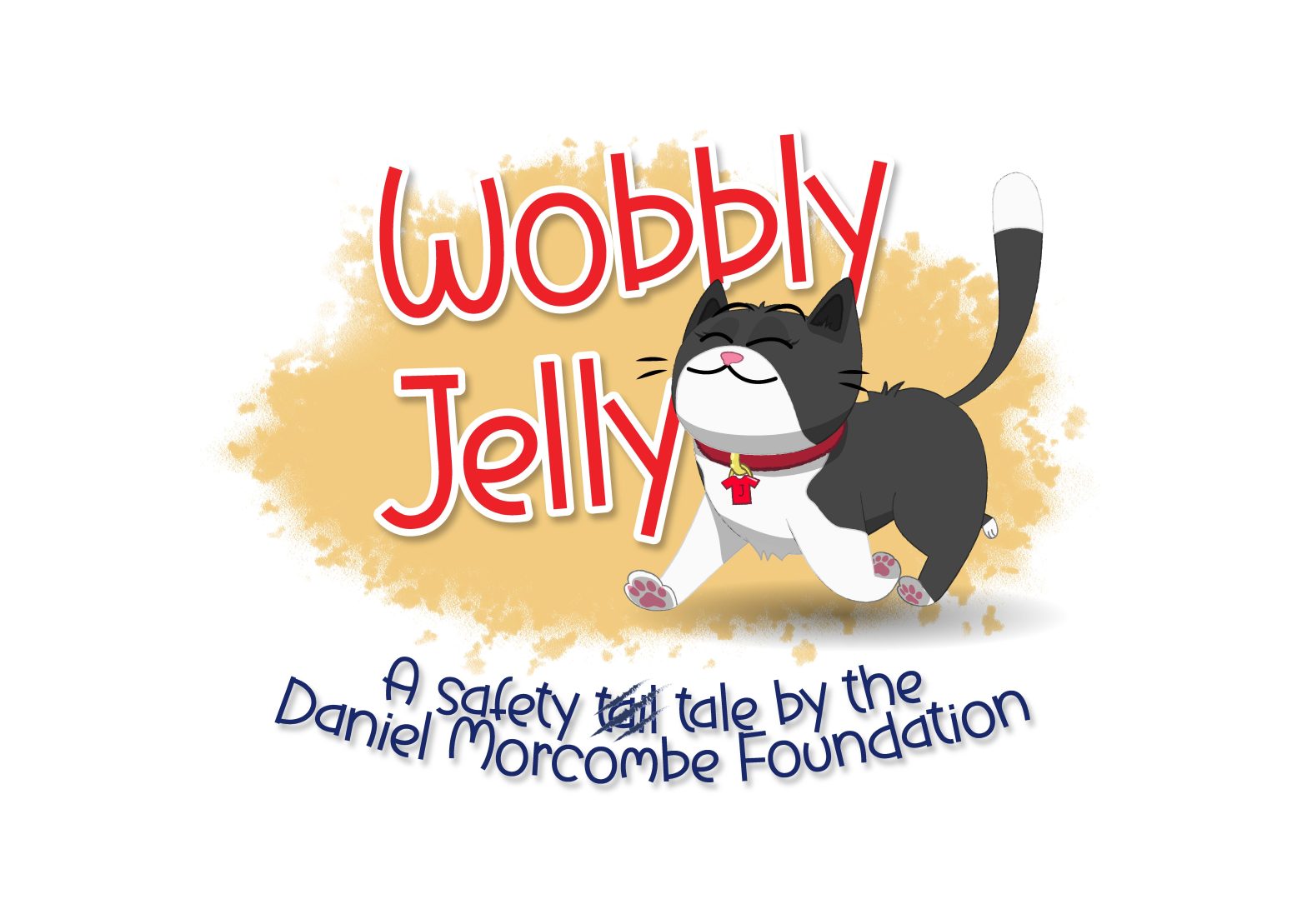
Wobbly Jelly
For children aged 0 to 6. Jelly is on a quest to understand how to stay safe. Read along as Jelly explores how to listen to body clues and Recognise, React, Report!
- Supported by a Companion Guide with conversation starters linking the content to Recognise, React, Report.
ABCSL / Interactive Resource / School & ELC Resources
2024 - ABCSL Upper Primary
For children aged 8 to 12, the theme will focus on enthusiastic consent including how to give and receive it, and how to identify grooming and coercive behaviours.
ABCSL / Interactive Resource / School & ELC Resources
2024 - Early Years and Lower Primary
For children aged 4 to 7, the theme will focus on enthusiastic consent including how to give and receive it, and how to identify grooming and coercive behaviours.
Online Safety / School & ELC Resources

Challenges and Choices
eSafety: Challenges and Choices is an interactive, choose your own style adventure animation for children aged 6 to 8 about online safety and grooming that helps develop skills to stay safe
online.
Interactive Resource / Resources for Parents and Carers / Resources for teachers / Recognise, React, Report / School & ELC Resources
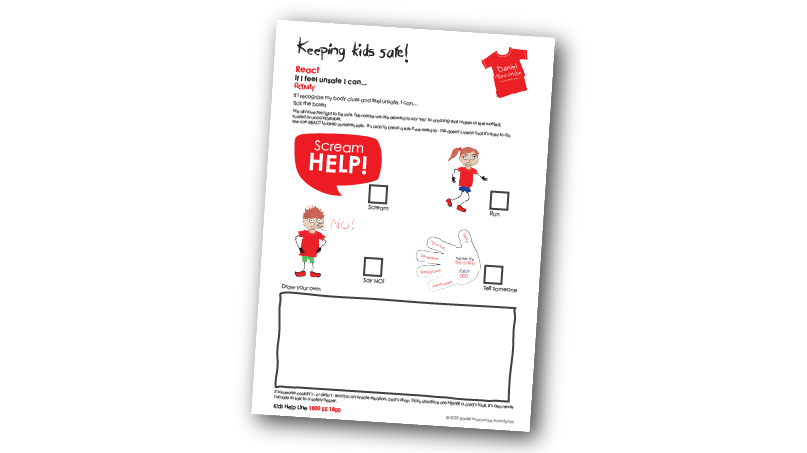
React - If I feel unsafe I can
Interactive Resource / Resources for Parents and Carers / Resources for teachers / Recognise, React, Report / School & ELC Resources
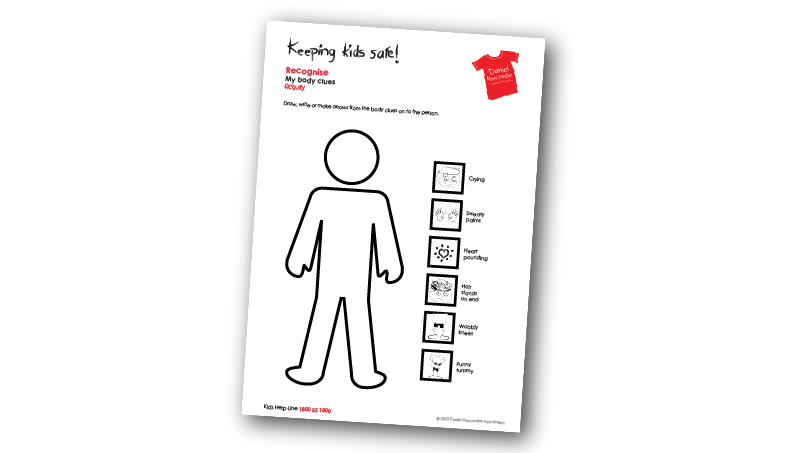
Recognise - My body clues
Interactive Resource / Resources for Parents and Carers / Resources for teachers / Recognise, React, Report / School & ELC Resources
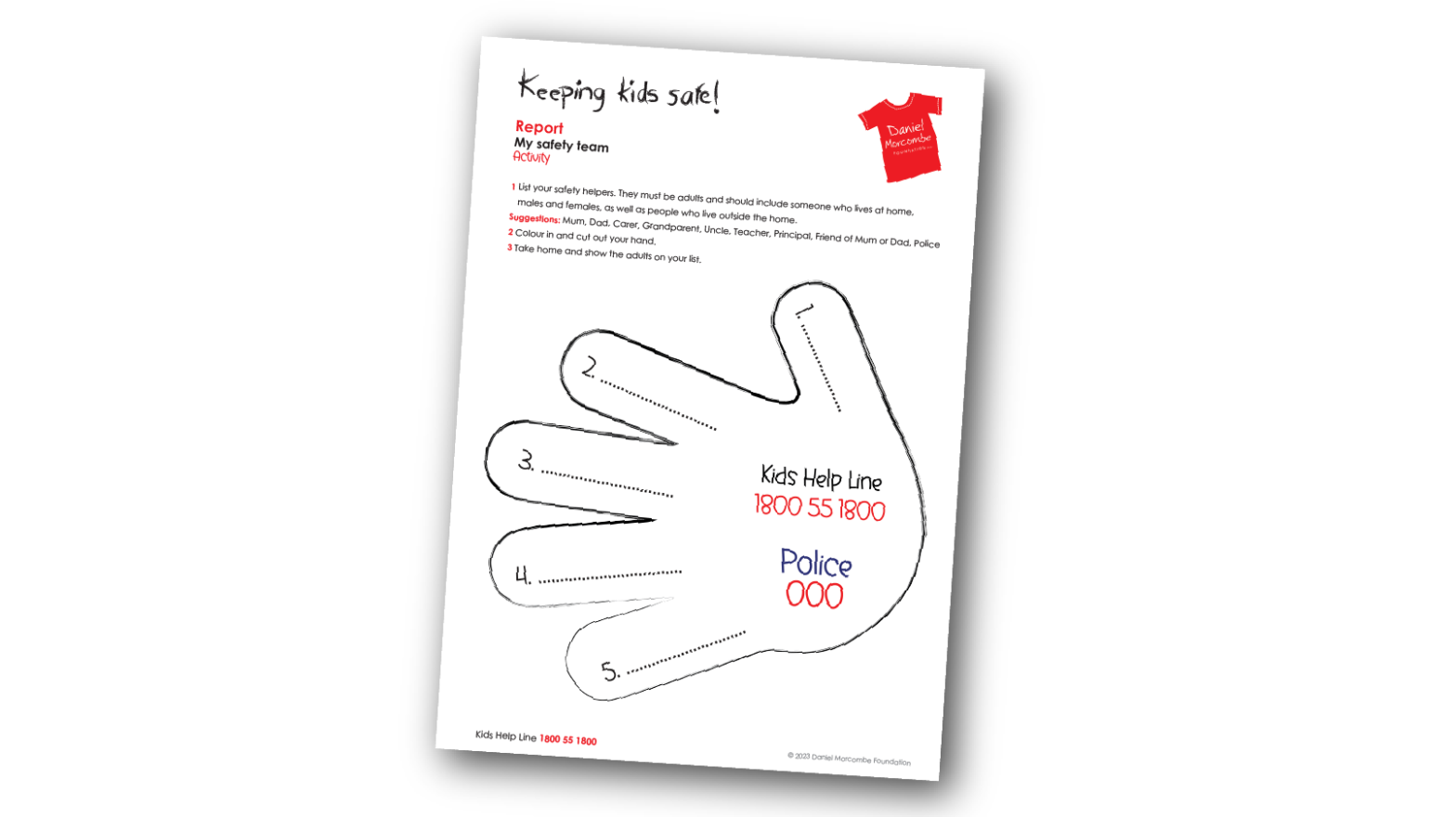
Report - Safety hand activity
Resources for teachers / School & ELC Resources
Keeping Kids Safe Resource Booklet
ABCSL / School & ELC Resources
2023 - Upper Primary
For children aged 8 to 12 with focus on the concepts of ‘my body, my choice’, and strategies children can then use when they need to seek, give or deny consent (permission).
ABCSL / School & ELC Resources
2023 - Early Years and Lower Primary
For children aged 4 to 7 with focus on the concepts of ‘my body, my choice’, and strategies children can then use when they need to seek, give or deny consent (permission).
Personal Safety / Online Safety

That's Suss: eSafety Challenge
ABCSL / School & ELC Resources
2022 - Upper Primary
For children aged 8 to 12, the theme will focus on a focus on boundaries and body parts, using age-appropriate, evidence based personal safety education strategies.
ABCSL / School & ELC Resources
2022 - Early Years
For children aged 4 to 7, the theme will focus on a focus on boundaries and body parts, using age-appropriate, evidence based personal safety education strategies.
ABCSL / School & ELC Resources
2021 – Early Years
For children aged 4 to 7, the lesson will focus on help seeking strategies.
ABCSL / School & ELC Resources
2021 - Upper Primary
The Upper primary lesson is aimed at children aged 8 to 12, the theme will focus on help seeking.
Resources for Parents and Carers
Feeling safe & being safe
When children and young people cannot live at home with their parents, Grandparents are often the ones who step in. This resource booklet is developed to help keep children and young people safe.
Group Activity / Resources for Parents and Carers / Resources for teachers / Recognise, React, Report
Making a safety network
Interactive Resource / Recognise, React, Report
React to feeling unsafe
Year 3 to 6
Learn how to recognise bullying behaviour and its impacts. Video length 1.00min.
Interactive Resource / Recognise, React, Report
Recognise body clues
Year 3 to 6
Our bodies gives us clues when we don’t feel safe. Video length 1.14min.
Interactive Resource / Recognise, React, Report
Recognise, React & Report
Year 3 to 6
Learn safety skills in Australia’s Biggest Child Safety Lesson 2017. Video length 18.34min.
Short Safety Video
Getting lost at the shopping centre
Year 3 to 6
Video length 3.54min.
videos / activities
Australia’s Biggest Child Safety Lesson
Prep to Year 2
Bruce and Denise Morcombe will share strategies for students in year 3 to 6 to help promote safety. How to Recognise, React and Report unsafe situations. Video length 18.15min.
ABCSL / School & ELC Resources
Australia’s Biggest Child Safety Lesson
Early Childhood to Year 2
The lesson has been developed using age appropriate evidence based personal safety education strategies for children between the ages of 3 to 8 years. Video length 24.45min.
Personal Safety / Short Safety Video / School & ELC Resources
Bruce's Cat Tale
Prep to Year 2
Bruce shares a narrative of a cat being chased by a dog. He outlines the cat’s physical reaction – such as fur standing up and hissing. This tale provides a creative and one-step removed way to unpack body clues for children. Video length 7.02min.
Short Safety Video
Obeying rules
Prep to Year 2
Video length 5.47min.
Interactive Resource / Group Activity / Resources for Parents and Carers / Resources for teachers
Making a safety network
Prep to Year 2
This video will teach you how to make a safety network of adults who will listen, believe and help you. Watch the video and complete the activity. Video length 1.22min.
Interactive Resource / Resources for Parents and Carers / Resources for teachers
Homework disaster
Prep to Year 2
What does it mean to get along with others? What would you do? Learn about respect and how to recognise feelings and emotions. Video length 1.11min.
Personal Safety / Interactive Resource / Resources for Parents and Carers / Resources for teachers
Safety School Safety helpers
Early Childhood to Year 2
The lesson has been developed using age appropriate evidence based personal safety education strategies for children between the ages of 3 to 8 years. Video length 4.08min.
Interactive Resource / Resources for Parents and Carers / Resources for teachers
Safety School Body parts
Early Childhood to Year 2
The Safety School lesson is suitable for 3 to 8 year old children. Anthony and Julia teaches key personal safety concepts for early childhood in a fun and interactive way. Video length 4.10min.
Interactive Resource
Safety School Body clues
Early Childhood to Year 2
The lesson has been developed using age appropriate evidence based personal safety education strategies for children between the ages of 3 to 8 years. Video length 2.57min.
Short Safety Video / Interactive Resource / Online Safety
Safe internet use
Year 3 to 6
What it means to be safe online. Video length 3.48min.
Short Safety Video / Resources for teachers
Footy fight
Year 3 to 6
Learn to understand the behaviour and feelings of others. Video length 2.32min.
Personal Safety / Short Safety Video / Online Safety / Resources for Parents and Carers
Safe mobile use
Year 7 to 9
Video length 6.57min.
Short Safety Video
Adam Goodes talks bullying
Year 3 to 9
AFL legend Adam Goodes talks about his experience of being bullied and provides advice. Video length 1.08min.
Short Safety Video / Online Safety
Brooke's story
Year 7 to 9
Brooke shares her story about chatting online. Video length 2.36min.
Short Safety Video / Interactive Resource / Online Safety
Staying safe online
Year 7 to 9
Sharing information and chatting online. Video length 4.05min.
Personal Safety / Short Safety Video / Online Safety
What is Geotagging?
Year 7 to 9
Is your location recorded when you take a photo? Video length 1.07min.
Personal Safety / Short Safety Video
What happens when you call Kids Helpline?
Prep to Year 12
Who will you talk to? How long is the phone call? How often can I call? Will you tell someone what I say? Junior Journo Jasper chats to Jess from Kids Helpline and finds out more. Video length 4.03min.
Personal Safety / Short Safety Video / Interactive Resource
iRelationship
Year 10 to 12
Helping young people to identify respectful relationships and positive relationship qualities. Video length 4min.
Short Safety Video
Party crashers
Year 10 to 12
Video length 5.23min.
Short Safety Video / Online Safety / Resources for Parents and Carers
Safe internet use
Personal Safety / Short Safety Video / Interactive Resource / Resources for Parents and Carers / Resources for teachers
Making a safety network
Special Education
Identify adults who will listen and keep you safe. Video length 3.00min.
Interactive Resource / Resources for teachers
React to feeling unsafe
Interactive Resource / Resources for teachers / School & ELC Resources
Recognise body clues
Special Education
Your body will tell you when you don’t feel safe, what are your body clues? Video length 2.26min.
Short Safety Video / School & ELC Resources
Being safe
Special Education
Our safe places can be at home, at school, with your friends or your safety helpers. Video length 2.28min.
Short Safety Video / Resources for Parents and Carers / School & ELC Resources
Rules for being safe
Special Education
Understand the rules for staying safe and types of touch that are not ok. Video length 2.38min.
Short Safety Video / Interactive Resource / Group Activity / Resources for Parents and Carers
Create a family password
Parents and Carers
Does your family have a password? It is quick, easy and fun to make one. Use the password for people who are trusted to pick up the child from school or activities. Video length 2.22min.
Short Safety Video / Online Safety / Resources for Parents and Carers
Online safety tips
Parents and Carers
Argos Taskforce Detective Inspector Jon Rouse delivers some important safety messages for children and young people. Learn about ways you can stay safe online. Video length 2.24min
Short Safety Video / Online Safety
Staying safe online
Aboriginal and Torres Strait Islander
Video length 10.26min.
Short Safety Video
Rules why do we have them
Aboriginal and Torres Strait Islander
Video length 5.32min.
Short Safety Video
Safe vs Unsafe
Aboriginal and Torres Strait Islander
Video length 2.13 min
Personal Safety / Resources for Parents and Carers / Resources for teachers / Factsheet
How to be a safety helper
A safety helper is an adult who forms part of a child or young person’s safety network. Safety helpers are responsible for making sure children feel safe and heard.
Resources for Parents and Carers / Factsheet
Harmful sexual behaviours
Parents and carers play a crucial role in keeping children and young people safe from harm and abuse. This factsheet has been specifically designed to provide parents and carers with the necessary information and tools to help them to identify and respond to harmful sexual behaviours.
Interactive Resource / Resources for Parents and Carers / Factsheet
Safety Planning
Tailoring safety plans to meet the needs of each family’s unique situation is vital to ensuring that children remain safe from harm.
Online Safety / Resources for Parents and Carers / Factsheet
Video calling
Video calling is fast becoming a popular part of our everyday lives. Apps such as Facetime, Whatsapp, Messenger and Skype are now being used for a range of purposes from socialising with friends and family to engaging in extracurricular activities and online learning for school.
Resources for Parents and Carers / Factsheet
Positive coping strategies
Moments of crisis and turmoil can lead children and young people to experience intense feelings that can be emotionally overwhelming and scary.
Resources for Parents and Carers / Factsheet
Communication during a crisis
How we communicate with children and young people during a time of crisis can directly influence these outcomes.
Personal Safety / Resources for Parents and Carers / Factsheet
Promoting self-care during a crisis
During times of crisis, children and young people will normally look to the adults in their life as role models for how to cope and keep themselves safe. If adults are modelling positive behaviour strategies for dealing with crisis and stress, children are more likely to follow suit.
Online Safety / Factsheet
Cyberbullying
Internet access is a regular part of life for many children and young people around the world. It is the responsibility of adults to keep children safe, this includes helping them to develop cyber safety skills. Touchscreen technologies allow children to access the internet quickly and easily but often they do not understand the complexity of their actions online.
Online Safety / Factsheet
Cybersafety
The internet can be a wonderful tool for children to learn, communicate with others and play games, but this isn’t without risks. Children are accessing technology and the internet at a younger age than ever before. It’s never too early to start chatting to your child about how to stay safe online.
Personal Safety / Factsheet
Talking personal safety
It is the responsibility of adults to keep children safe, this includes helping them develop personal safety skills. It is not about scaring or frightening children but increasing communication and learning new skills.
Factsheet
Lost, missing or abducted?
There are about 38,000 missing person reports made to police every year in Australia. Young people between the ages of 13 -17 are the most likely group to be reported missing, making up about 50% of all missing person reports.
Resources for Parents and Carers / Resources for teachers
I am concerned about a child
If you have concerns about a child’s safety it can be difficult to know what to do. Most children and young people live in safe and supportive environments however some will sadly experience child abuse.
Resources for Parents and Carers / Resources for teachers / Factsheet / School & ELC Resources
Child sexual abuse
Sexual abuse of children is against the law. Child sexual abuse is when an adult, another child or adolescent uses their power to involve a child in sexual activity. Sexual activity includes sexual intercourse and a range of sexual behaviours that can be physical, verbal or emotional.
videos
From your toes to your nose
Early Childhood
Sing along to this short, fun song that teaches young children that their body belongs to them.
Interactive Resource / Resources for Parents and Carers / Resources for teachers / Recognise, React, Report / School & ELC Resources
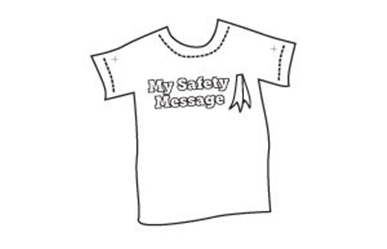
Bunting flags
Write or draw your own safety messages, cut out and display at home or school.
Interactive Resource / Resources for Parents and Carers / Resources for teachers / School & ELC Resources
Word Search
Can you find all hidden safety words in this word search?
Interactive Resource / Resources for Parents and Carers / Resources for teachers / School & ELC Resources

Crossword
Can you work out all of the words down and across?
Interactive Resource / Resources for teachers / School & ELC Resources

Colour in Morky
Why not have a colouring in competition at your school?
ABCSL / Interactive Resource / Resources for Parents and Carers / Resources for teachers
2020 - Upper Primary
Our upper primary lesson will focus on recognising safe and unsafe situations in the real and online world, for children aged 8 to 12.
ABCSL / Interactive Resource / Resources for Parents and Carers / Resources for teachers / Factsheet
2020 - Early Years
For children aged 4 to 7, the early years lesson focuses on safe and unsafe secrets and surprises.
Short Safety Video / Online Safety / Resources for Parents and Carers
Safe Bedrooms
Television commercial - Awareness campaign aimed at young people aged 13-15 years, parents and caregivers about the warning signs of online grooming.
Personal Safety / Online Safety / Resources for Parents and Carers / Resources for teachers
How do I report online grooming?
Factsheet
It's your move
Short Safety Video / Resources for Parents and Carers / Resources for teachers
Check Mate
Interactive Resource / Resources for Parents and Carers / School & ELC Resources
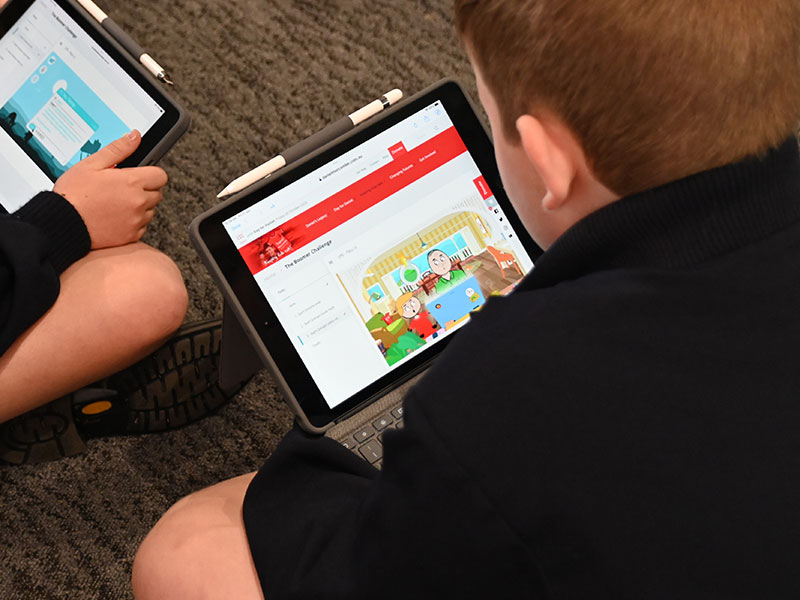
Guide to The Boomer Challenge
The Boomer Challenge gives children aged 8 to 12 the skills to recognise potentially unsafe and risky online situations, and to make decisions and problem solve in the online world.
Interactive Resource / Resources for Parents and Carers
How to create a Family Technology Agreement
Personal Safety / Factsheet
Understanding online grooming
Online Safety / Resources for Parents and Carers / Factsheet
How do I react to online grooming?
Personal Safety / Resources for Parents and Carers / Resources for teachers / Factsheet
How do I recognise online grooming?
Resources for Parents and Carers / Factsheet
How predators trick children: what parents need to know
Resources for teachers / School & ELC Resources
Lesson 3: Seeking help
YEAR 7 TO 9
Lesson length: 55min.
Resources for teachers / School & ELC Resources
Lesson 2: Understanding bullying
Interactive Resource / Resources for teachers / School & ELC Resources
Lesson 1: Safe relationships
YEAR 7 TO 9
Lesson length: 55min.
Resources for teachers / School & ELC Resources
Lesson 4: Responding to bullying
YEAR 3 TO 6
Lesson length: 40min.
Interactive Resource / Resources for teachers / Factsheet / School & ELC Resources / Workplace Resources
Lesson 3: Understanding bullying
YEAR 3 TO 6
Lesson length: 40min.
Interactive Resource / Resources for teachers / School & ELC Resources
Lesson 2: Reacting
Interactive Resource / Resources for teachers / School & ELC Resources
Lesson 1: Recognising safe
YEAR 3 TO 6
Lesson length: 40min.
Interactive Resource / Resources for teachers / School & ELC Resources
Lesson 3: Responding to unsafe situations
PREP TO YEAR 2
Lesson length: 40min.
Resources for Parents and Carers / Resources for teachers / Factsheet
Signs of child abuse
Child abuse is one of the most under reported crimes in our community. A recent survey conducted by Act for Kids found that a quarter of adults did not know the signs of child abuse and neglect and would need to google how to report suspected abuse.
Factsheet
Travel safe
Travelling to school or other familiar places by themselves is an opportunity for children and young people to develop confidence and new skills.
Personal Safety
Lesson 2: Being Safe
PREP TO YEAR 2
Lesson Length: 40min
Interactive Resource / Resources for Parents and Carers / Resources for teachers
Lesson 1: Feeling Safe
PREP TO YEAR 2
Lesson Length: 40min
Personal Safety / Resources for Parents and Carers / Resources for teachers / School & ELC Resources
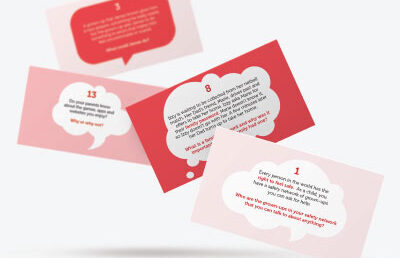
Conversation Cards
Prep to Year 12
Download our Conversation Cards. Choose between the two different conversation cards resources we have available. One for Parents and Carers and the other for Educators.
Interactive Resource / Group Activity / School & ELC Resources
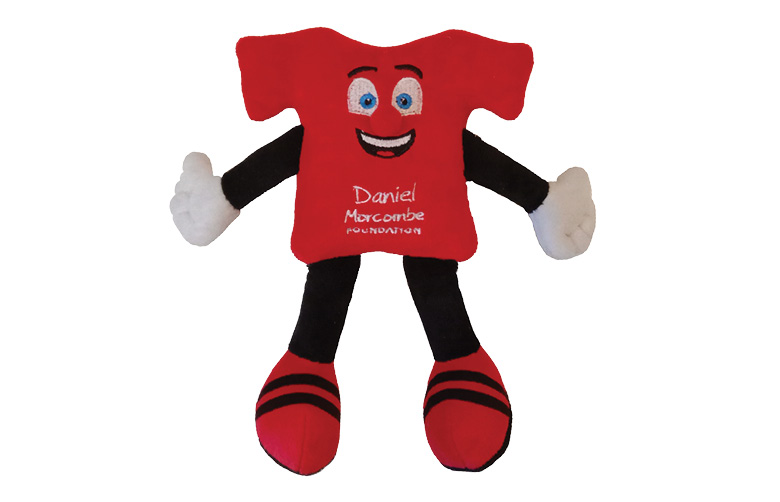
Morky's Safety Mission Board Game
While we take child safety very seriously here at the Daniel Morcombe Foundation, our big, red mascot Morky absolutely loves fun and games!
Short Safety Video / Resources for Parents and Carers / Resources for teachers
Red Flags
Video length 5.05min.
ABCSL / School & ELC Resources
2019
Suitable for children aged 9 to 12 years of age. Our ABCSL news style lesson discusses safety issues with young people.
ABCSL / School & ELC Resources
2018 - Safety school
Suitable for children 3 to 8 years old, ABCSL Safety School teaches key personal safety concepts for early childhood.
ABCSL / School & ELC Resources
2017
Children aged 8 to 12 years old will learn how to Recognise, React and Report unsafe situations and help promote personal safety.
Interactive Resource / Resources for Parents and Carers / Resources for teachers / School & ELC Resources
Safety School Feelings
Early Childhood to Year 2
The lesson has been developed using age appropriate evidence based personal safety education strategies for children between the ages of 3 to 8 years. Video length 4.20min.
Interactive Resource / Recognise, React, Report / School & ELC Resources

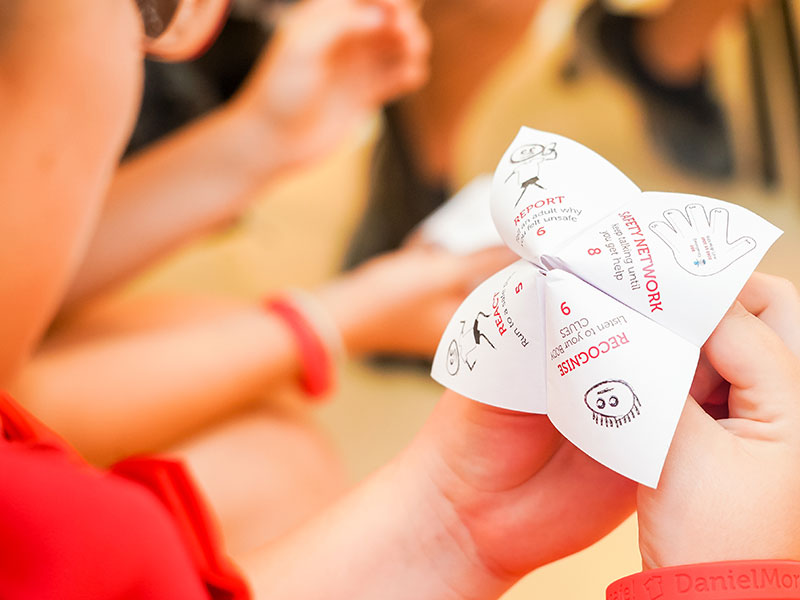
Child Safety Chatterbox
A fun take home game that children can play with their safety network.
Resources for teachers / School & ELC Resources
Educator Guide
Year 10 to 12
Resources for teachers / School & ELC Resources
Educator Guide
Year 3 to 6
Resources for teachers / School & ELC Resources
Educator Guide
Prep to Year 2
Resources for teachers / School & ELC Resources
Educator Guide
Early Childhood
Resources for teachers / School & ELC Resources
 Prof Jeremy Prichard
 Dale Tolliday
 A/Prof Megan Lim
 Ashley Katz
 Prof Nicola Henry
 Marc Zen
 Dr Giselle Woodley
 Renee West
 Leon Huxtable
 Dr Sian Tomkinson
 Dr Robyn Vertongen
 hielke
 Sarah Napier
  Prof Alan McKee
 Maree Crabbe


